Stretch Marks in Adults: Prevention, Care, and Product Support
by Maroa Noa · 28 May 2026
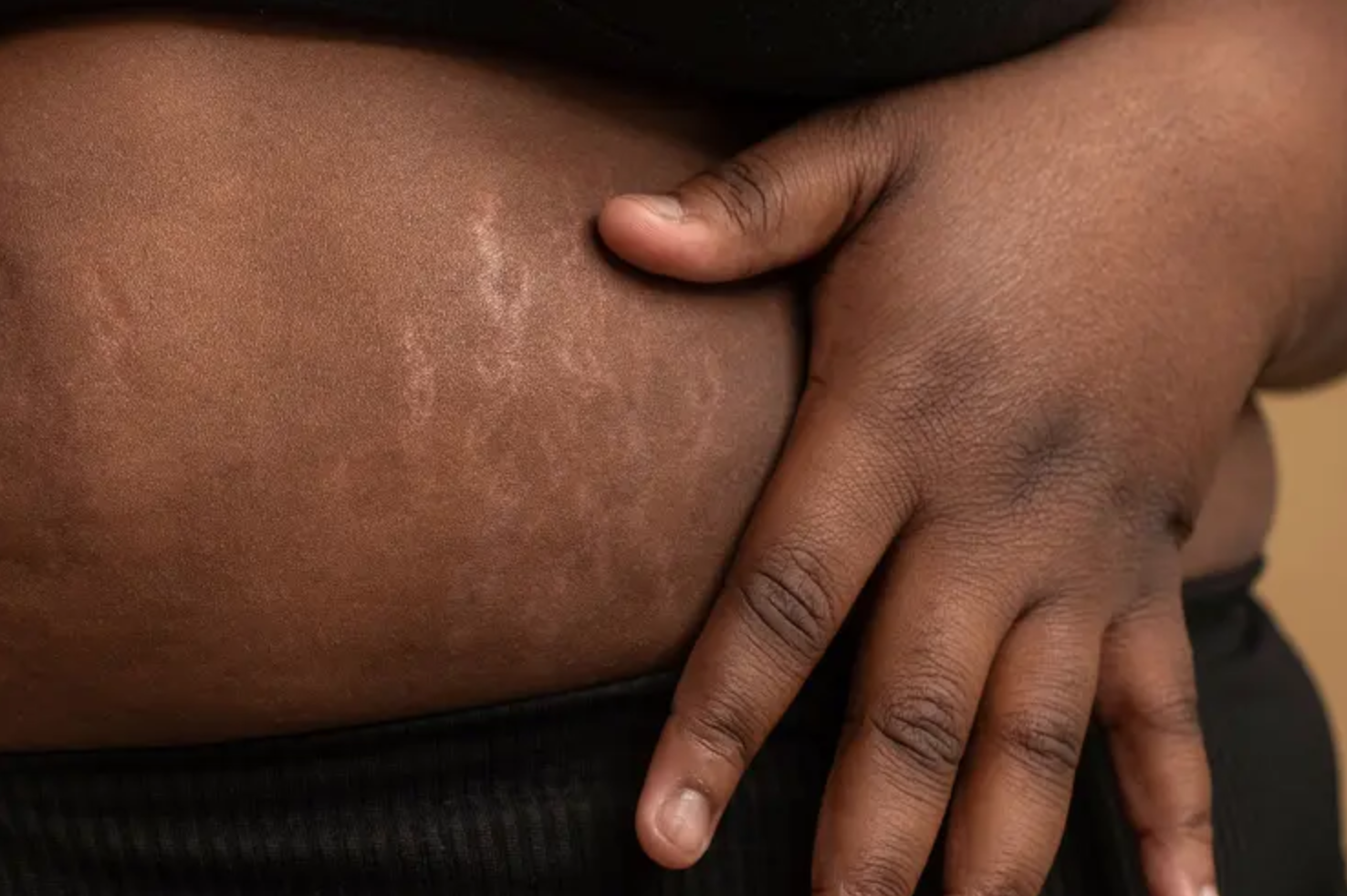
What exactly is a stretch mark?
A stretch mark is a type of scar that develops when our skin stretches or shrinks quickly. The abrupt change causes the collagen and elastin, which support our skin, to rupture. As the skin heals, stretch marks may appear.
Not everyone develops these narrow bands on their skin. Fluctuating hormone levels seem to play a role. You may also have a higher risk if people in your family get stretch marks.
If you develop stretch marks, you’re most likely to do so during these times:
- Growth spurts that happen in puberty
- Pregnancy
- Rapid weight loss or gain
- Weight training when you have rapid muscle growth
Applying a corticosteroid to your skin for a long time can also cause stretch marks. If you have Cushing’s disease or Marfan syndrome, you may see stretch marks.
When stretch marks first appear, they tend to be red, purple, pink, reddish-brown, or dark brown, depending on your skin colour. Early stretch marks may feel slightly raised and can be itchy.
In time, the colour fades, and the narrow bands sink beneath your skin. If you run your finger over a mature stretch mark, you often feel a slight depression.
Who gets stretch marks?
Stretch marks can happen to anyone, but some people are more likely than others to get them. Genetics is one of the strongest predictors. If people you’re related to have stretch marks, you’re likely to develop them, too.
Pregnancy is a common cause of stretch marks. Research published in 2015 suggests that up to 90 percent of pregnant people will develop stretch marks.
Other risk factors include:
- using a corticosteroid medication
- losing or gaining weight rapidly
- having breast enlargement surgery
- increasing muscle size rapidly, for example through bodybuilding
Signs and symptoms
Before stretch marks begin to emerge, the skin can appear thin and pink. It may also feel irritated or itchy.
The marks initially develop as wrinkly, raised streaks that can be red, purple, pink, reddish-brown, or dark brown, depending on skin color. The streaks eventually fade, flatten, and tend to turn silvery over time.
Stretch marks may gradually become less noticeable, but this can often take years.
What causes stretch marks?
When your skin rapidly stretches or shrinks, it causes the elastin and collagen in your skin to break. Elastin’s main role is to allow your skin to stretch. Collagen’s main role is to provide structure, strength and support to your skin. As your skin heals, stretch marks appear in areas where elastin breaks.
Risk factors
Anyone can develop stretch marks, but some factors increase your likelihood of getting them, including:
- Being female
- Having a personal or family history of stretch marks
- Being pregnant, especially if you're young
- Rapid growth in adolescence
- Rapidly gaining or losing weight
- Using corticosteroids
- Having breast enlargement surgery
- Exercising and using anabolic steroids
- Having a genetic disorder such as Cushing syndrome or Marfan syndrome
Natural and Medical remedies for stretch marks
-
Vitamin A (Retinoids)
Vitamin A in skincare is commonly known as a retinoid. Retinoids are popular ingredients in many over-the-counter creams and serums because they help improve skin texture and make the skin appear smoother, firmer, and more youthful. They work by encouraging faster skin cell turnover and boosting collagen production, which may help reduce the appearance of stretch marks over time.
-
Hyaluronic Acid
Hyaluronic acid is well known for its powerful moisturising and skin-repairing properties. It’s commonly found in creams, lotions, and serums designed to hydrate the skin deeply. Stretch marks don’t just affect the surface of the skin — they also damage the skin’s collagen and elasticity underneath. By keeping the skin hydrated and plump, hyaluronic acid may help improve skin flexibility and support the healing process.
-
Centella Asiatica (Cica)
Centella asiatica, often called cica, is a herbal ingredient widely used in Korean skincare products. Cica creams are known for helping soothe sensitive skin and supporting skin repair, especially when dealing with scars or irritation. Because stretch marks are a form of skin scarring, products containing centella may help improve the skin’s appearance and strengthen the skin barrier over time.
-
Aloe Vera
Aloe vera has been used for years as a natural remedy for soothing and moisturising the skin. The gel found inside the aloe vera plant can be applied directly to the skin to help calm irritation and support healing. Since stretch marks form when the skin becomes damaged and stretched, aloe vera’s skin-repairing properties may help reduce their appearance and support healthier-looking skin.
-
Laser Therapy
Laser treatments use focused light energy to target specific areas of the skin. Depending on the type of laser used, the treatment may help stimulate collagen production and improve the appearance of stretch marks so they blend more naturally with the surrounding skin. Some people may need multiple sessions before noticeable results appear. Laser therapy is also commonly used to improve scars, uneven skin texture, and redness.
-
Microdermabrasion
Microdermabrasion is a professional skin treatment that exfoliates the skin more deeply than regular at-home scrubs. During the procedure, a specialist uses a handheld device to gently remove dead skin cells from the surface of the skin. This process may help improve skin texture and reduce the visibility of stretch marks over time.
-
Radiofrequency Treatments
Radiofrequency treatments use energy waves to heat the deeper layers of the skin and stimulate collagen production. This can help make the skin feel firmer and smoother. In some cases, radiofrequency is combined with microneedling, allowing the energy to reach deeper layers of the skin for enhanced collagen stimulation and skin repair.
-
Chemical Peels
Chemical peels involve applying special acids, such as glycolic acid, to the surface of the skin to remove damaged outer layers. Professional peels are stronger than at-home products and are usually performed in clinics. By encouraging skin renewal and collagen production, chemical peels may help improve skin texture and reduce the appearance of stretch marks over time.
Best Natural Oil for Prevention & Hydration
- Dr Organic Mum Stretch Mark Oil 100ml with Calendula – A natural botanical oil blend with calendula, argan oil, almond oil, and vitamin E for soothing and nourishing stretch-prone skin.
This product is ideal if you prefer a more natural approach. It helps:
- Keep skin moisturized
- Reduce itching and tightness
- Improve elasticity during pregnancy
- Support gradual fading of early stretch marks
Calendula and chamomile also help calm irritated or sensitive skin.
- Bio-Oil (Specialist Skincare Oil) 125ml – A globally trusted skincare oil formulated to improve stretch marks, scars, uneven skin tone, and dry skin.
Bio-Oil remains one of the most popular stretch mark products because it works on:
- Old and new stretch marks
- Scar appearance
- Uneven skin tone
- Dry or aging skin
It absorbs quickly and is suitable for daily body use. Consistent use for at least 3 months is usually recommended for visible improvement.
- Vitabiotics Pregnacare Stretch Mark Cream - 100 ml – A pregnancy-safe moisturising cream with Vitamin E, aloe vera, and omega oils designed to support skin elasticity during pregnancy.
This cream is specifically formulated for expecting mothers and focuses on:
- Improving skin elasticity
- Preventing pregnancy-related stretch marks
- Deep hydration
- Skin softness and comfort
Its lightweight texture makes it suitable for daily application on the stomach, thighs, hips, and breasts.
- HealthAid Cocoa Butter High Potency Cream - 75ml – An intensive cocoa butter and Vitamin E cream that deeply nourishes skin and supports elasticity for stretch mark-prone areas.
Cocoa butter is widely used to improve skin softness and flexibility. This option is especially useful for:
- Dry skin
- Early stretch marks
- Maintaining skin hydration
- Supporting smoother skin texture
Vitamin E also helps support skin repair and nourishment.
- Bepanthen Stretch Mark Cream 100ml – A Centella asiatica and olive oil-based cream formulated to improve skin elasticity and reduce stretch marks during pregnancy and weight changes.
Centella asiatica is a highly respected skincare ingredient known for supporting collagen production and skin healing. This product helps:
- Improve skin resilience
- Maintain moisture balance
- Support regeneration of stretched skin
- Reduce the appearance of developing marks
It is gentle enough for sensitive skin and pregnancy use.
When to seek a dermatologist's expertise
Stretch mark treatments that you can buy at a store or online can be expensive. If you find yourself spending a lot of time and money without getting any results, seeing a board-certified dermatologist can be helpful.
The in-office procedures have proven more effective than the creams, lotions, and gels. Dermatologists can also tell you about any new product or procedure that may help.
Management and Treatment
How are stretch marks treated?
In general, treating stretch marks is difficult. Treatment improves the appearance of stretch marks, but they may not go away completely. Addressing your stretch marks when they first appear yields the best results. Older, deep stretch marks may be more challenging to treat.
Treatment options include:
Laser skin resurfacing – Laser skin resurfacing is a type of surgery. Your healthcare provider directs short, concentrated, pulsating beams of light on your stretch marks. The laser removes layers of your skin very precisely, which stimulates the growth of new collagen fibres to create smoother skin.
You should see an immediate difference after treatment. Your skin may continue to improve for up to a year, and the improvement may last for several years.
Side effects may include the appearance of small white bumps on your skin (milia), swelling, dark areas of skin (hyperpigmentation) and light areas of skin (hypopigmentation).
Dermabrasion – Dermabrasion is a type of surgery. Your healthcare provider uses a specialised instrument to scrape away your stretch marks. The process improves your skin contour and results in smooth new skin.
It will likely take at least two weeks for your skin to heal. You should see full, complete results several weeks or months after the procedure.
Side effects may include milia, hyperpigmentation, hypopigmentation, swelling and enlarged pores.
Microneedling – During microneedling, your healthcare provider pokes your skin with thin needles. The tiny punctures stimulate the growth of new collagen and elastin fibres to create firmer skin. Most people require between three and six treatments to see results.
Some people see full, complete results within four to six months. But it may take longer.
Side effects may include irritation, discolouration, swelling and flaky skin.
Retinol – Retinol comes from vitamin A. It’s an ingredient in many over-the-counter (OTC) anti-ageing skin care creams because of its ability to improve wrinkles, skin texture and your skin’s hydration levels.
Retinol creams may require at least six months of regular use before you see noticeable results.
Side effects may include dry skin, irritation, discolouration and light sensitivity.
Prevention
Stretch marks cannot always be prevented. However, the following steps may help to reduce the risk:
- Maintain a healthy weight.
- Avoid yo-yo dieting.
- Eat a balanced diet rich in vitamins and minerals. Consuming a suitable amount of vitamins A and C can help support the skin, as well as the minerals zinc and silicon.
- Aim for slow and gradual weight gain during pregnancy.
- Drink six to eight glasses of water every day.
FAQs
1. Can stretch marks go away completely?
Stretch marks usually do not disappear completely, but they can fade significantly over time. Early treatment with moisturisers, retinoids, laser therapy, or collagen-boosting treatments may help improve their appearance and make them less noticeable.
2. What is the best treatment for stretch marks?
The best treatment depends on the severity and age of the stretch marks. Mild or early stretch marks may respond well to creams containing retinoids, hyaluronic acid, or Centella asiatica. More advanced stretch marks may require professional treatments such as laser therapy, microneedling, radiofrequency, or chemical peels.
3. Are stretch marks only caused by pregnancy?
No. While pregnancy is a common cause, stretch marks can also develop due to rapid weight gain or loss, puberty, bodybuilding, hormonal changes, corticosteroid use, or certain medical conditions such as Cushing syndrome and Marfan syndrome.
4. Which products help reduce stretch marks?
Products that contain ingredients like Vitamin A (retinoids), hyaluronic acid, cocoa butter, Vitamin E, aloe vera, and Centella asiatica may help improve skin elasticity and reduce the appearance of stretch marks. Popular options include Bio-Oil, Bepanthen Stretch Mark Cream, Dr Organic Stretch Mark Oil, and cocoa butter creams.
5. When should I see a dermatologist for stretch marks?
You should consider seeing a dermatologist if your stretch marks are severe, rapidly spreading, causing discomfort, or not improving with over-the-counter products. A dermatologist can recommend professional treatments such as laser therapy, microneedling, or chemical peels for more effective results