Tinea Corporis (Ringworm): Symptoms, Causes, and Treatment in Kenya
by Maroa Noa · 17 Jul 2026
A Pharmily guide to identifying and treating this common skin infection
Ringworm sounds like it should involve a worm, but it doesn't. Tinea corporis, better known as ringworm, is a fungal skin infection named after the ring-shaped rash it causes. It's one of the most common skin problems we see and treat at Pharmily, and it usually clears up well once you know what you're dealing with.
What Causes Ringworm?
Ringworm is caused by tiny fungi called dermatophytes, which feed on keratin, a protein found in your skin, hair, and nails. These fungi like warm, damp conditions and spread easily through:
- Skin-to-skin contact with someone who has it
- Touching contaminated surfaces, clothes, towels, or bedding
- Contact with infected pets or farm animals
- Sharing sports equipment or gym mats
- Warm, humid weather, which is common in much of Kenya
Because it spreads easily, ringworm often passes between family members, at school, or among people who play close-contact sports like wrestling.
What Does It Look Like?
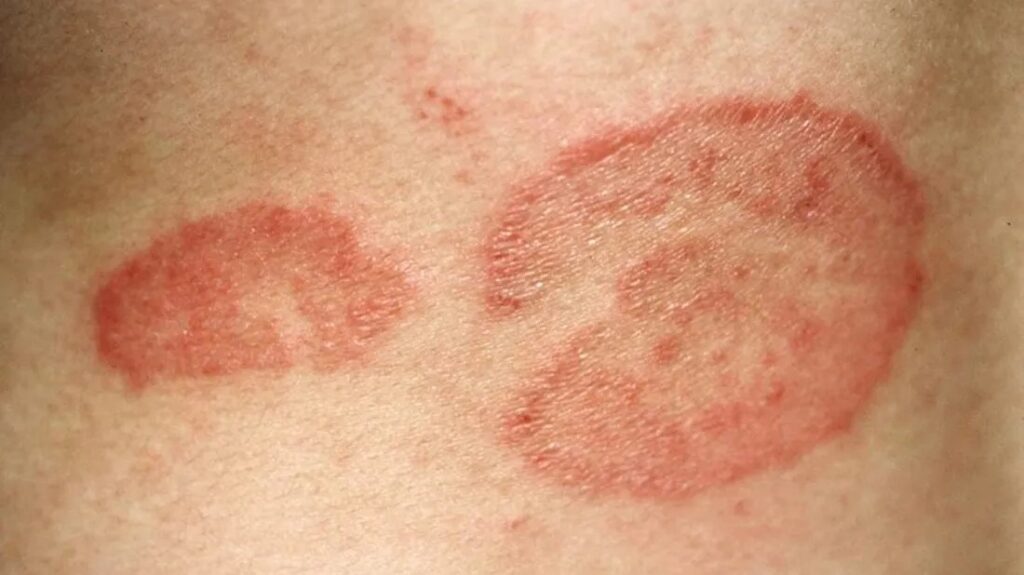
Ringworm usually looks like:
- A red, scaly rash shaped like a ring, with a raised, clear border
- Skin in the middle of the ring that looks more normal or healthy
- Itching, sometimes quite intense
- A patch that slowly grows bigger over time
- Several rings joining together if left untreated
- Occasionally, small blisters along the edge of the rash
It can show up almost anywhere, but it's most often seen on the arms, legs, chest, back, and neck.
|
Ringworm in Children Kids catch ringworm easily because of close contact at school and sharing towels, combs, and clothes. If your child has a ring-shaped rash, start treatment right away and let the school know, since untreated ringworm can spread quickly to classmates. |
How Is It Diagnosed?
Most of the time, the ring shape is enough for a pharmacist or clinician to recognize it. If it's not clear, they may:
- Take a small skin scraping and look at it under a microscope
- Use a special UV light, though this doesn't work for every type of fungus
- Send a sample for a fungal culture, if the case is unusual or won't go away
How Is It Treated?
Creams You Can Buy Over the Counter
Most cases clear up well with antifungal creams, available at Pharmily:
- Clotrimazole cream, used twice a day for two to four weeks
- Terbinafine cream, used once or twice a day, often for a shorter time than others
- Miconazole cream, used twice a day
Keep using the cream for the full time recommended, even once the rash looks like it's gone. Stopping too early is one of the biggest reasons ringworm comes back.
Tablets, When Needed
A doctor may prescribe antifungal tablets (like terbinafine, itraconazole, or griseofulvin) if:
- The infection covers a large area of skin
- Creams haven't worked
- It's affecting hairy areas, since creams often can't reach deep enough into the hair follicle
- Your immune system is weakened
Tablets should always be prescribed and monitored by a pharmacist or doctor, since they can interact with other medicines and cause side effects.
How to Prevent Ringworm
- Keep your skin clean and dry, especially after sweating
- Don't share towels, clothes, combs, or bedding
- Wash sports gear and gym equipment often
- Get pets checked and treated if they show signs of a skin infection
- Wear breathable fabrics, especially in hot, humid weather
- Avoid touching an infected person's rash until their treatment starts working
Is It Ringworm, or Something Else?
Ringworm can sometimes look like eczema or psoriasis, both of which also cause red, scaly patches. The giveaway is the ring shape with clearer skin in the middle, plus the fact that it spreads to others. If a rash doesn't respond to antifungal cream after two weeks, get it looked at again, treating the wrong condition won't help and may just delay proper care.
When Should You See a Pharmacist or Doctor?
- The rash hasn't improved after two to three weeks of cream
- It's widespread or covers a large area
- It's on the scalp or in the beard area
- You have diabetes or a weakened immune system
- The rash is oozing, very painful, or looks infected
Pharmily pharmacists can help confirm whether a rash looks like ringworm, recommend the right treatment, and give tips to stop it spreading to others at home.
Quick Recap
- Ringworm is a contagious fungal infection, not caused by worms
- It typically shows up as an itchy, scaly, ring-shaped rash with a clearer center
- Most cases clear with antifungal cream over two to four weeks
- Finishing the full course of treatment is key to stopping it coming back
- Good hygiene and not sharing personal items helps stop it spreading at home
FAQs
1. What is tinea corporis (ringworm)?
Tinea corporis, commonly called ringworm, is a common fungal infection that affects the skin. Despite its name, it is not caused by a worm but by dermatophyte fungi that thrive on the skin, hair, and nails.
2. What are the symptoms of ringworm?
Ringworm often starts as a small, itchy patch that gradually expands into a ring-shaped rash. The edges are usually raised, red, and scaly, while the centre appears clearer than the surrounding skin.
3. How do you get ringworm?
Ringworm spreads through direct contact with an infected person or animal. It can also spread by sharing towels, clothing, bedding, combs, or sports equipment contaminated with the fungus.
4. Is ringworm contagious?
Yes. Ringworm is highly contagious and can spread easily through skin-to-skin contact or contaminated objects. It may also be transmitted from infected pets and livestock.
The risk of spreading the infection decreases significantly once effective antifungal treatment has been started.
5. What is the best treatment for ringworm?
Most mild cases can be treated successfully using over-the-counter antifungal creams such as clotrimazole, terbinafine, or miconazole. These medicines should be applied exactly as directed for the full treatment period.
6. How long does ringworm take to heal?
With proper treatment, most cases begin improving within one to two weeks and completely clear within two to four weeks. Healing time may vary depending on the size and location of the infection.
7. Can ringworm go away without treatment?
Ringworm rarely clears quickly without treatment and may continue spreading to other parts of the body or to other people. The infection can persist for several months if left untreated.
8. Can children get ringworm?
Yes. Children are more likely to develop ringworm because they frequently have close contact with classmates, siblings, pets, and shared items such as towels, hats, and sports equipment.
Early treatment helps prevent the infection from spreading to other children at school or within the household.
9. What's the difference between ringworm and eczema?
Ringworm usually forms a distinctive circular rash with a raised, scaly border and a clearer centre. It is caused by a fungal infection and can spread from person to person.
Eczema, on the other hand, is an inflammatory skin condition that is not contagious and usually lacks the characteristic ring-shaped appearance.
10. When should I see a doctor or pharmacist?
Seek medical advice if the rash does not improve after two to three weeks of treatment or if it continues to spread. You should also seek help if the infection affects the scalp, beard, or nails.
People with diabetes, weakened immune systems, or signs of bacterial infection such as pus, severe pain, or swelling should be evaluated promptly.
This article is for general educational purposes and does not replace professional medical advice. Please consult a pharmacist or doctor for diagnosis and treatment tailored to your specific situation.